Published
In Victoria, a pool or spa barrier has to be inspected and a certificate of barrier compliance lodged with council every four years. Most fails come down to a handful of things you can check yourself in ten minutes. Run through this list before the inspector arrives.
1. The gate closes and latches by itself
Open the gate fully, let go and watch. Then try it from halfway and from just ajar. It has to close and latch on its own from every open position, without a push. Hinges lose tension over time, so this is the most common fail.
2. The gate swings away from the pool
Pool gates must open outwards, away from the pool area. If yours opens into the pool area, it needs to be rehung or replaced.
3. Nothing to climb within 900 mm of the outside
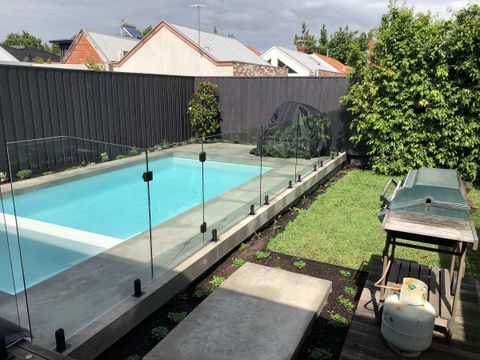
Walk the outside of the fence and look at the 900 mm strip next to it. Pot plants, a BBQ, outdoor chairs, an esky, garden edging, a tree branch or an air-conditioning unit can all give a child a foothold. Move what you can, and note anything fixed.
4. The fence is still 1200 mm high
Measure from the finished ground on the outside. New paving, a deck, a garden bed or built-up mulch can raise the ground and quietly make the fence too low.
5. No gaps over 100 mm
Check between panels or bars, and under the bottom of the fence. Soil washes away and pavers move, so gaps under the fence often grow over the years.
6. Boundary fences and walls that form part of the barrier
If a boundary fence or wall is part of your pool barrier, check the pool side for footholds, rails or horizontal timbers a child could climb. This is one of the most common reasons older pools fail.
7. Doors and windows into the pool area
Older pools sometimes have a door or window that opens straight into the pool area. Your inspector will look at these closely.
If something fails
A fail isn't the end of the world. Your inspector will tell you what needs fixing. Send us the report and a few photos, and we'll quote the specific work, often done in one visit, and can arrange the re-inspection. See gates and repairs for the common fixes.
This checklist is a plain-English summary, not legal advice. The edition of AS 1926.1 that applies depends on when your pool was built, and your council and inspector have the final say. More detail is in our Victorian compliance guide.